Five Small Experiments to Master Drying and Storing Garden Herbs
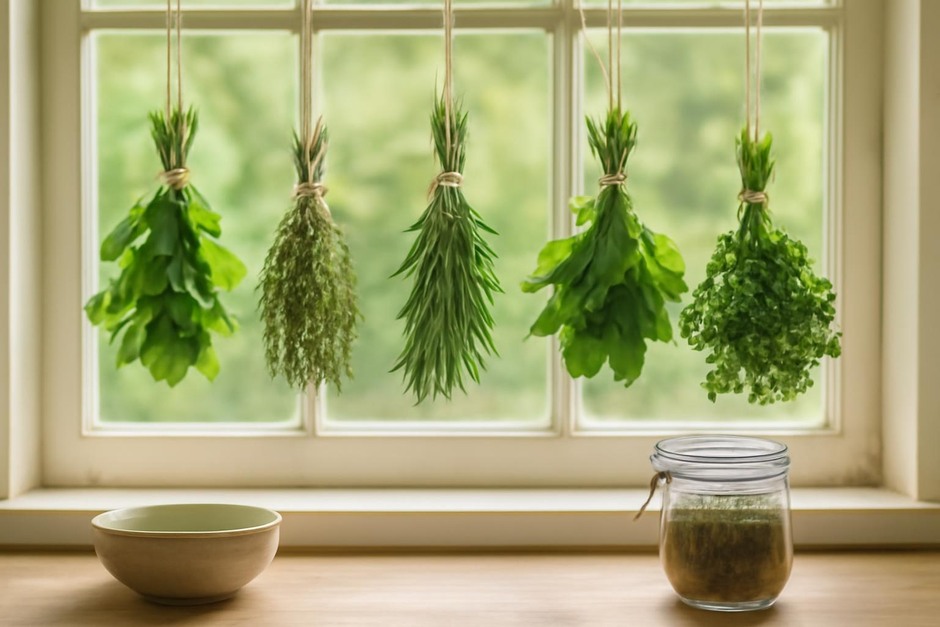
Fresh herbs are a seasonal pleasure, and learning to dry and store them well keeps that flavour year-round. These five small experiments are designed to be short, repeatable, and cumulative: each teaches a single observation or technique you can use immediately. Do them across a few weekends or over a single harvest day.
Experiment 1 — When to harvest: morning vs afternoon
Goal: Notice how harvest timing affects aroma and moisture.
Materials: scissors, two small bunches of the same herb (e.g., oregano or thyme), paper towels, small labelled envelopes or jars.
- Harvest one bunch in the early morning after the dew has dried, and a second bunch in mid-afternoon.
- Pat both gently with a paper towel to remove surface moisture. Leave them in a single layer for two hours at room temperature, then smell each bunch and note how strong the aroma is.
- Label and store one stem from each bunch in separate jars for later tasting while cooking.
What to observe: Morning-harvested herbs often smell brighter; late-day cutting can be slightly more relaxed in scent. Use this to plan larger harvests for drying when herbs have their peak oils.
Experiment 2 — Quick kitchen-test for washing vs not washing
Goal: Decide whether to rinse herbs before drying in your environment.
Materials: two small bunches, a bowl of water, clean kitchen towel, timer.
- Rinse one bunch quickly under cool water; leave the other unwashed.
- Shake off excess water and place both on a towel. After 1 hour, check for spots of dampness and smell both bunches.
- Dry both fully by your usual method and compare any discoloration or off-odours after a week.
What to observe: If your bathroom/kitchen is humid, rinsing can prolong drying and encourage mould; if your herbs are dusty or insecty, a gentle rinse is worth the extra drying time. Your experiment tells you which trade-off suits your space.
Experiment 3 — Air-drying: bundles vs single-leaf screens
Goal: Learn which air-drying method works best for particular herbs.
Materials: two bunches of the same herb (one leafy, one woody), twine, scissors, a fine mesh screen or cooling rack.
- Make a small bundle of the first bunch, tie the stems, and hang it upside-down in a warm, dry, ventilated spot out of direct sunlight.
- Spread the second bunch in a single layer on the mesh screen and place it in the same location.
- Check each daily. Note how many days to crispness and whether leaves fall off or retain shape.
What to observe: Tender herbs (basil, parsley) often do better on screens to avoid trapped moisture; woody herbs (rosemary, thyme) usually air-dry well as bundles.
Experiment 4 — Gentle heat methods: oven vs dehydrator (short test)
Goal: Compare a low oven and a dehydrator for speed and flavour retention.
Materials: oven capable of low temperatures, dehydrator if available, baking sheet, parchment, thermometer if you have one.
- Preheat oven to its lowest setting (often 80–100°C / 175–210°F) or use a dehydrator at 35–45°C (95–115°F).
- Place a thin layer of leaves on the baking sheet or dehydrator tray. Check every 10–15 minutes in the oven; note the time to crispness and any change in colour or aroma.
- Do a short side-by-side: remove one tray when crisp, compare smell and leaf brittleness with air-dried samples.
What to observe: Oven drying is fast but risks browning if too hot; a dehydrator gives gentler, even drying. Decide whether speed or colour matters more for each herb.
Experiment 5 — Testing dryness and storing to taste
Goal: Learn how to know when herbs are truly dry and how storage affects flavour over weeks.
Materials: small glass jars with tight lids, labels, marker, a pinch of each dried sample from earlier experiments.
- To test dryness: crush a leaf between fingers. It should crumble easily and release scent; if it bends and doesn’t snap, it needs more drying.
- Place small equal pinches from each drying method into labelled jars. Seal and store in a cool, dark cupboard.
- Open each jar after one week and then after four weeks. Smell and, if desired, taste a tiny pinch in a simple dish (plain butter or oil toast) to compare intensity.
What to observe: Properly dried herbs retain most of their aroma for months if stored away from light, heat, and moisture. Note which method produced the most useful flavour for your cooking.
Next steps and simple rules to keep
- Harvest for flavour: Pick when oils are high—often mid-morning after dew evaporates.
- Dry thoroughly: Leaves should crumble; stems should be brittle.
- Store smart: Use small, airtight jars, label with date, keep cool and dark.
- Use and rotate: Open jars periodically and use the oldest jars first—herbs decline slowly but noticeably.
These five brief experiments will build a reliable approach to preserving herbs that fits your home: watch, note, and repeat with different varieties. Over the season you’ll develop simple habits that keep pantry jars full of summer flavour through the colder months.